Verb Patterns
- หลัง verb บางคำต้องมีส่วนเติมเต็มอีกชนิดหนึ่ง เช่น object, to-infinitive, V-ing หรือ base form - รูปที่เลือกขึ้นกับ pattern ของคำกริยาและตำแหน่งของ object
- แยก subject, verb, object และ complement ได้
- to-infinitive คือ to + base verb; bare infinitive คือ base verb ที่ไม่มี to; V-ing อาจทำหน้าที่เป็น gerund
เข้าใจเนื้อหาและเงื่อนไข
1. แยกความต่างระหว่าง Verb + Infinitive กับ Verb + Object + Infinitive
- Verb + to-infinitive ทันที: ประธานของประโยคเป็นผู้ลงมือกริยาตัวที่สองเอง เช่น
They decided to leave.- สำนวนพิเศษ fail + to-infinitive: หมายถึงทำไม่สำเร็จ หรือไม่สามารถกระทำได้ เช่น
The test may fail to measure creativity.(หลัง modal ใช้ base verb fail แล้วตามด้วย to + base verb)
- สำนวนพิเศษ fail + to-infinitive: หมายถึงทำไม่สำเร็จ หรือไม่สามารถกระทำได้ เช่น
- Verb + Object + to-infinitive: มีกรรมมารับก่อน แล้วตัวกรรมนั้นเองที่เป็นผู้กระทำกริยา infinitive เช่น
They encouraged Niran to apply.(นิรันดร์เป็นผู้สมัคร)- กริยากลุ่มนี้ได้แก่:
ask,advise,encourage,tell,want,need,persuade,remind - ลำดับคำ: วาง Object ไว้ก่อน complement เสมอ เช่น
They told us to wait.(ห้ามเขียน*They told to wait us.)
- กริยากลุ่มนี้ได้แก่:
- การเปรียบเทียบผู้กระทำกริยา:
She wants to leave.→ ประธานต้องการ และประธานเป็นคนออกไปเองShe wants her brother to leave.→ ประธานต้องการ แต่คนที่ออกไปคือพี่ชาย (her brother = object)
- กริยาที่ยืดหยุ่น: เช่น
helpสามารถใช้ได้ทั้งhelp + object + base verbและhelp + object + to-infinitive(helped me findหรือhelped me to find)
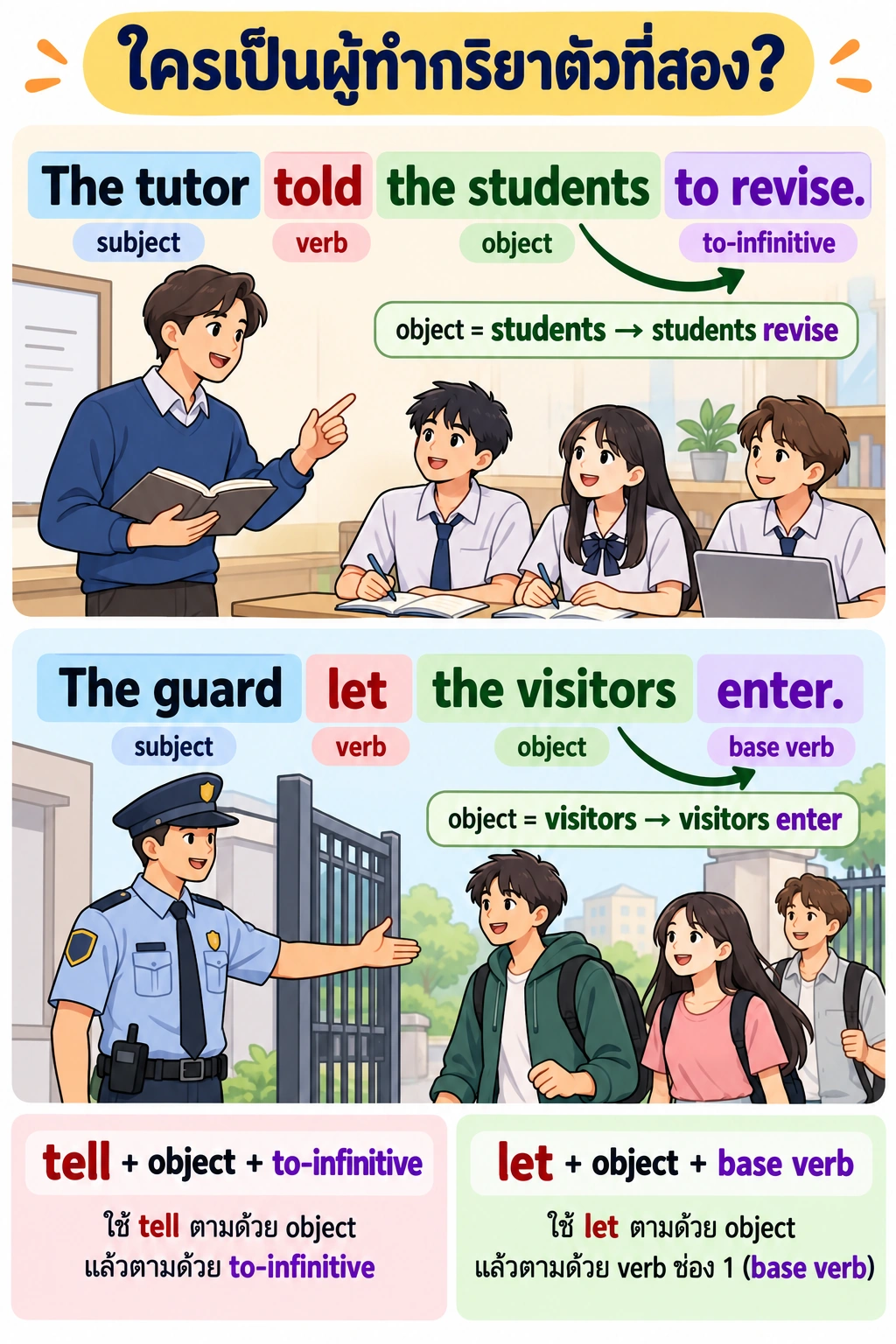
- จุดสังเกตสำคัญในภาพ:
- The tutor told the students to revise:
studentsเป็นกรรม และเป็นผู้กระทำกริยาto revise(tell + object + to-infinitive) - The guard let the visitors enter:
visitorsเป็นกรรม แต่กริยาตามหลังใช้ base verb โดยไม่มี to (let + object + base verb)
- The tutor told the students to revise:
2. โครงสร้างที่บังคับใช้ Bare Infinitive (Base Verb ไม่มี to)
- หลัง Core Modals: ใช้ base verb เสมอ เช่น
You should check the date. - Causative Verbs (let / make): ในรูป active voice ใช้
let / make + object + base verbเช่น:The guide let us enter.(อนุญาตให้เข้า)The delay made us wait.(ทำให้ต้องรอ)
- กริยาเกี่ยวกับการรับรู้ (Verbs of Perception): เช่น
see,hear,watchObject + V-ing: เน้นเห็นเหตุการณ์ขณะที่กำลังดำเนินอยู่ เช่นI saw her crossing the road.Object + Bare Infinitive: เน้นเห็นเหตุการณ์ตลอดทั้งช่วงตั้งแต่ต้นจนจบ เช่นI saw her cross the road.- ความต่างนี้แสดงมุมมองต่อเหตุการณ์ ทั้งสองรูปถูกต้องตามไวยากรณ์ขึ้นอยู่กับเจตนาของประโยค
3. การวิเคราะห์ช่องว่าง (Slot Analysis) และสำนวนเฉพาะของกริยา
- ห้ามเติม
toโดยอัตโนมัติ ให้ระบุโครงสร้างเฉพาะของกริยานั้น ๆ:
- Causative have:
have + object (สิ่งของ) + V.3: จัดการหรือจ้างวานให้ผู้อื่นทำบางสิ่งกับสิ่งของนั้น เช่นShe had her hair styled.have + person + base verb: ให้บุคคลเป็นผู้ลงมือกระทำสิ่งนั้น เช่นShe had the stylist style her hair.
- ban + person + from + V-ing: สั่งห้ามบุคคลไม่ให้กระทำการใด เช่น
The school banned students from having best friends.(เนื่องจาก from เป็น preposition จึงตามด้วย gerund) - กลุ่มกริยาสื่อสาร (say / tell / talk / promise):
tell + person + information / that-clause: บอกข้อมูลกับบุคคล เช่นHe told me that he had no girlfriend.หรือใช้ขึ้นต้นประโยคTell me, did he ever give you a ring?(ห้ามใช้ say me)say + content + to + person: เช่นShe said it to me.talk / speak + to / with + person: เช่นI spoke to her.promise + person + that-clause: สัญญาหรือยืนยันกับบุคคล เช่นHe promised me that he had no girlfriend.
- see ... as ...:
- Active:
see + object + as + complement - Passive:
be seen as + complementเช่นThe socks were seen as a symbol of warmth and care.
- Active:
4. กริยาแสดงข้อเรียกร้องหรือคำแนะนำ (Mandative Subjunctive)
- โครงสร้าง Subjunctive: เมื่อคำกริยาอย่าง
insist,demand,request,recommend,suggestถูกใช้ในความหมายว่า ยืนยันหรือเรียกร้องให้มีการกระทำเกิดขึ้น ใน that-clause จะต้องใช้:that + subject + base verb (กริยารูปพื้นฐาน ไม่ผัน ไม่เติม -s/-ed)เสมอ เช่นHer parents insist that she retake the course.- ภาษาอังกฤษแบบบริติช (British English) อาจใช้
should + base verbได้เช่นกัน:Her parents insist that she should retake the course.
- ระวังบริบทข้อเท็จจริง (Factual claim): หาก
insistใช้ในความหมายว่ายืนยันว่าข้อมูลเป็นความจริง ไม่ใช่ข้อเรียกร้อง ให้ใช้ tense ตามปกติ:She insists that the course is useful.(ไม่ใช่ subjunctive)
- insist on + noun / V-ing: เป็นอีกหนึ่งโครงสร้างสำนวน เช่น
They insist on retaking the course.(หากมี that-clause ให้ตรวจว่าหลัง that มีประธานแล้วตามด้วย base verb)
ความรู้นี้ใช้กับโจทย์แบบไหน?
เติมช่องหลัง verb ที่มี object ตามหลัง
- สังเกตจากโจทย์: พบ want/tell/ask/encourage/let/make หรือกริยารับรู้ แล้วมีบุคคลหรือสิ่งของคั่น
- เลือกวิธีคิด: ดูว่าใครเป็นผู้ทำกริยาถัดไป แล้วเลือก object + to-infinitive หรือ bare infinitive ตาม verb pattern
เติม that-clause หลัง verb ที่แสดงการเรียกร้องหรือคำแนะนำ
- สังเกตจากโจทย์: พบ insist, demand, request, recommend หรือ suggest ตามด้วย that และช่องว่างของกริยา
- เลือกวิธีคิด: แยกว่า verb หมายถึงเรียกร้องให้ทำหรือยืนยันข้อเท็จจริง; ในความหมายเรียกร้องใช้ that + subject + base verb หรือ that + subject + should + base verb
แก้ลำดับคำหรือรูปกริยาหลัง modal
- สังเกตจากโจทย์: มี object หลายตัว, infinitive หรือ to ที่อาจเกินมา
- เลือกวิธีคิด: แบ่งช่องเป็น verb [object] [complement]; ตรวจว่าคำกริยานำอนุญาต to หรือไม่ และอย่าวาง object หลัง complement โดยไม่มีเหตุผล
ตัวอย่างโจทย์พร้อมวิธีคิด
ตัวอย่าง 1 · ใช้ object + to-infinitive
Complete naturally: “The counsellor advised ___ (I / speak) to the course coordinator before changing my major.”
- advise ในความหมายให้คำแนะนำใช้ object ตามด้วย to-infinitive เมื่อระบุผู้ที่จะทำ
- I เปลี่ยนเป็น object pronoun me เพราะอยู่หลัง advised
- ผู้ให้คำแนะนำคือ counsellor ส่วนผู้ที่จะ speak คือ me; จึงวาง me ก่อน to speak
คำตอบ: The counsellor advised me to speak to the course coordinator before changing my major. = ที่ปรึกษาแนะนำให้ฉันคุยกับผู้ประสานงานหลักสูตรก่อนเปลี่ยนสาขา
ตรวจเหตุผล: ถามว่าใครเป็นผู้พูด: counsellor ไม่ใช่คนไปคุย; me เป็นผู้กระทำ speak จึงต้องอยู่ระหว่าง advised กับ to speak
ตัวอย่าง 2 · แยก bare infinitive หลัง let
Complete: “The museum lets visitors ___ (take) photos in the main hall, but not in the archive.”
- subject ของ take คือ visitors ซึ่งเป็น object หลัง lets
- let ใช้โครง let + object + bare infinitive ใน active voice จึงไม่ใส่ to
- เงื่อนไข but not in the archive จำกัดพื้นที่ถ่ายภาพ ไม่เปลี่ยน pattern ของกริยา
คำตอบ: The museum lets visitors take photos in the main hall, but not in the archive. = พิพิธภัณฑ์อนุญาตให้ผู้เข้าชมถ่ายภาพในโถงหลัก แต่ไม่ใช่ในหอจดหมายเหตุ
ตรวจเหตุผล: คงรูป bare verb take หลัง object visitors; ถ้าใช้ lets visitors to take จะเติม to เกินตาม pattern นี้