Determiners & Quantifiers
determiner ช่วยระบุว่ากำลังพูดถึงคำนามใดหรือมีเท่าไร; quantifier เป็นกลุ่มหนึ่งของ determiner ที่บอกจำนวนหรือปริมาณ จึงต้องเลือกให้เข้ากับ countability และเจตนาของประโยค
พื้นฐานที่ใช้: ใน noun phrase ให้หา determiner ที่อยู่หน้าคำนาม และแยก plural count noun ออกจาก uncountable noun ก่อนเลือก many/much/few/little
เข้าใจเนื้อหาและเงื่อนไข
1. ระบบ Determiners และคำบอกปริมาณ (Quantifiers)
- Determiner คือคำกำหนดหน้านามที่ทำหน้าที่ระบุชี้เฉพาะหรือบอกปริมาณของคำนาม:
- กลุ่มคำ Determiners:
- Articles (a/an, the), Demonstratives (this, that, these, those), Possessives (my, your, their), Quantifiers (many, some, few, much) และ Numbers
- กฎการใช้คำกำหนดหน้านามหลัก (Central Determiners):
- โดยทั่วไปจะใช้ Central Determiner เพียงตัวเดียวหน้าคำนาม เช่น my bag, the answer, some rice (ห้ามซ้อนกัน เช่น the my bag ผิดไวยากรณ์)
- คำนำหน้า Determiner (Pre-determiners): คำบางคำสามารถอยู่นำหน้า Determiner อื่นได้ เช่น both my cousins, all the rooms
- บทบาทสองด้าน: ชี้เฉพาะเจาะจง (the report, this seat) หรือ บอกปริมาณ (three reports, some rice) โดยคำบอกปริมาณหลายคำสามารถทำหน้าที่เป็น Pronoun เดี่ยว ๆ ได้เมื่อละนามที่เข้าใจกัน ("Do you need paper? Yes, I need some.")
2. การจับคู่ Quantifiers กับชนิดคำนามและนัยทางความหมาย
- ใช้กับคำนามนับได้พหูพจน์ (Plural Count Nouns): many, a few, few
- many chairs, a few friends
- ใช้กับคำนามนับไม่ได้ (Uncountable Nouns): much, a little, little
- much time, a little water
- ใช้ได้กับทั้งสองกลุ่ม: some, any, enough, all, a lot of
- enough chairs, enough water
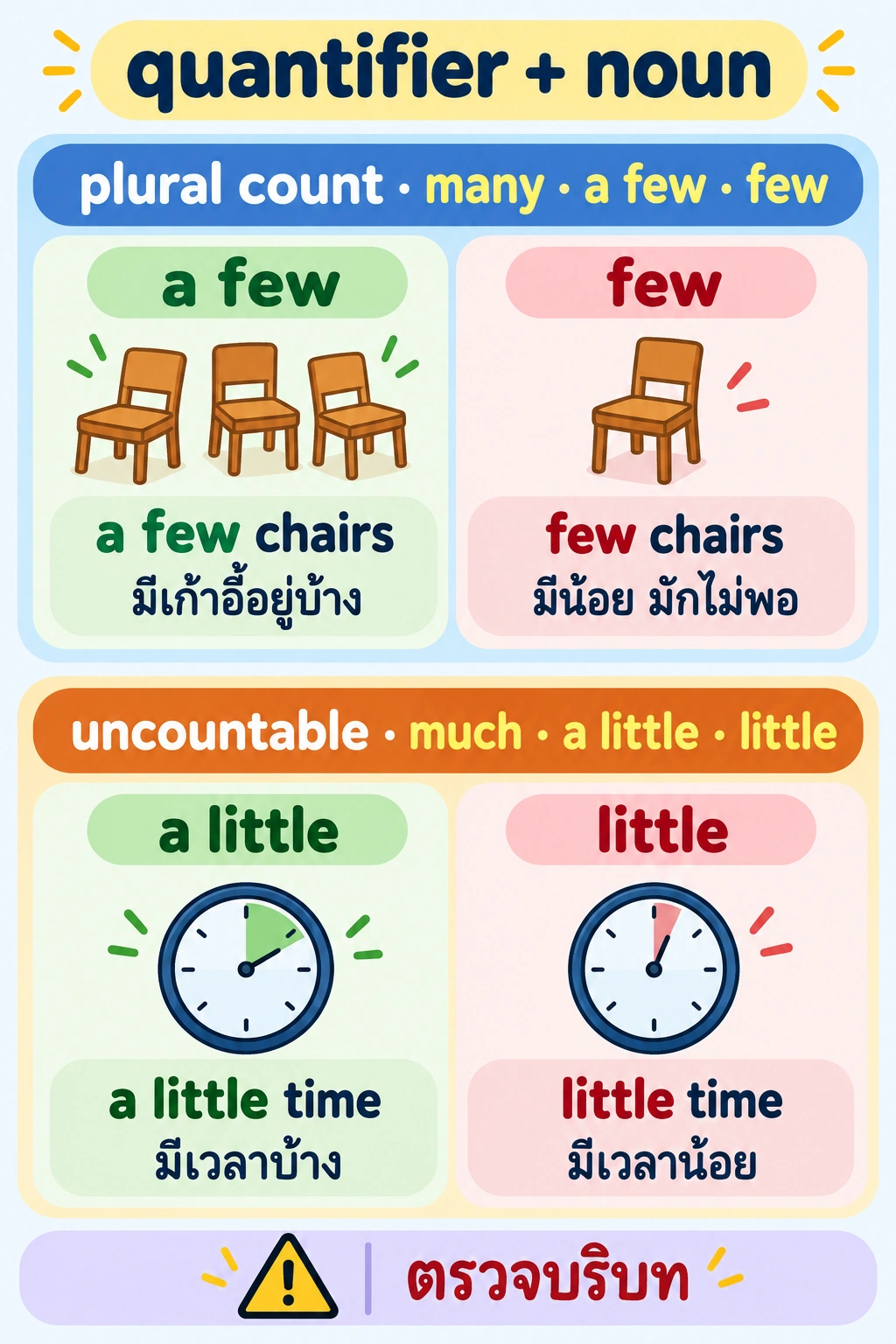
- จุดสังเกตสำคัญในภาพ:
- ภาพรวม: ผังจำแนก Quantifier ตามชนิดคำนามและนัยยะของความเพียงพอ
- Plural Count: many (มาก), a few (มีอยู่บ้าง/พอมี), few (มีน้อยมาก/แทบไม่มี)
- Uncountable: much (มาก), a little (มีอยู่บ้าง/พอมี), little (มีน้อยมาก/แทบไม่มี)
- นัยสำคัญระหว่างมี a กับไม่มี a:
- a few / a little (เชิงบวก): สื่อว่า "พอมีอยู่บ้าง" ยังพอใช้งานได้
- few / little (เชิงลบ): สื่อว่า "มีน้อยมากจนแทบไม่มี" มักไม่เพียงพอและเป็นปัญหา
3. ความแตกต่างในการใช้ some และ any
- some:
- มักใช้ในประโยคบอกเล่า เช่น "I have some questions."
- ข้อยกเว้นสำคัญ: ใช้ในประโยคคำถามได้เมื่อเป็น ข้อเสนอ (Offer) หรือ คำขอร้อง (Request) ที่คาดหวังคำตอบว่าใช่ เช่น "Would you like some tea?" หรือ "Can I have some water?"
- any:
- ใช้ในประโยคปฏิเสธ ("I don't have any money.") และคำถามทั่วไป ("Do you have any questions?")
- การใช้ any ในประโยคบอกเล่า: มีความหมายว่า "อันไหนก็ได้ / ใครก็ได้ / ไม่จำกัดว่าสิ่งใด" เช่น "You can choose any card." (คุณสามารถเลือกไพ่ใบไหนก็ได้)
ความรู้นี้ใช้กับโจทย์แบบไหน?
เติม quantifier หน้าคำนาม
สังเกตจากโจทย์: noun หลังช่องเป็น plural count หรือ uncountable และประโยคบอกว่ามีมาก/น้อย/พอหรือไม่
เลือกวิธีคิด: จำแนกชนิด noun ก่อน; many/few ใช้กับ plural count, much/little ใช้กับ uncountable; ค่อยเลือกว่าต้องการ a few/a little (มีบ้าง) หรือ few/little (น้อยจนเป็นปัญหา)
ตรวจลำดับ determiner ใน noun phrase
สังเกตจากโจทย์: มี both/all, possessive, number หรือ article ซ้อนกันหน้าคำนาม
เลือกวิธีคิด: แยกว่าเป็น pre-determiner ที่ใช้ร่วมได้หรือเป็น central determiner ที่ชนกัน; both my cousins และ all the books ถูก แต่ the my cousins ไม่ถูก
ตัวอย่างโจทย์พร้อมวิธีคิด
ตัวอย่าง 1 · เลือก quantifier ตาม countability และความพอเพียง
เติมคำแล้วแปล: “We have ___ chairs for everyone, but only ___ water for the trip. We need to borrow more chairs.” (few / a few / little / a little)
- chairs เป็น plural count noun และเราต้องยืมเพิ่ม จึงสื่อว่ามีไม่พอด้วย few, ไม่ใช่ a few ซึ่งมักสื่อว่ามีอยู่บ้างในแง่บวก
- water เป็น uncountable noun จึงเลือกกลุ่ม little/a little; only วางกรอบว่าเหลือเพียงเล็กน้อย จึงใช้ a little water ในความหมายมีอยู่บ้างแต่ปริมาณจำกัด
- ตรวจให้ each quantifier ผูกกับ noun ที่ถูกชนิด: few + chairs, a little + water
คำตอบ: We have few chairs for everyone, but only a little water for the trip. We need to borrow more chairs. = เรามีเก้าอี้ไม่พอสำหรับทุกคน แต่น้ำสำหรับเดินทางมีอยู่นิดหน่อย จึงต้องยืมเก้าอี้เพิ่ม
ตรวจเหตุผล: few รับ plural count noun; little/a little รับ uncountable noun. คำว่า need to borrow more chairs ยืนยันว่าจำนวนเก้าอี้ไม่เพียงพอ
ตัวอย่าง 2 · แยก both ที่ใช้ร่วมกับ possessive determiner
เลือกประโยคที่เป็นธรรมชาติและแปล: “Both my sisters brought their notes.” หรือ “The both my sisters brought their notes.”
- both ใช้เป็น pre-determiner ก่อน central determiner my ได้ในรูป both my sisters
- the และ my แข่งกันทำหน้าที่ central determiner; วาง the my ติดต่อกันหน้าคำนามแบบนี้ไม่ได้
- sisters เป็น plural noun ที่รับ both และ their เป็น possessive determiner ที่ชี้ notes
คำตอบ: Both my sisters brought their notes. = พี่สาว/น้องสาวของฉันทั้งสองคนเอาบันทึกของตนมาด้วย
ตรวจเหตุผล: เมื่อแทน my ด้วย the จะได้ both the sisters; both ยังอยู่หน้าคำนำหน้าคำนาม ส่วน possessive my ใช้เดี่ยวกับ noun ได้