Phrases & Clauses
การแยก phrase ออกจาก clause ช่วยตัดสินว่าใจความยืนเป็นประโยคได้หรือยัง และช่วยแก้ fragment ที่มีคำเชื่อมขึ้นต้นแต่ยังไม่มี main clause
พื้นฐานที่ใช้: มองหา subject และ finite verb ไม่สับสนรูป verb ที่เติม to/-ing/-ed กับกริยาแสดง tense
เข้าใจเนื้อหาและเงื่อนไข
1. ความแตกต่างระหว่างวลี (Phrase) กับอนุประโยค (Clause)
- วลี (Phrase): คำหนึ่งคำหรือกลุ่มคำที่ทำหน้าที่ร่วมกันเป็นหน่วยทางไวยากรณ์ โดยมีคำหลัก (Head) เป็นแกนกลาง แต่ ไม่มีกริยาแท้ที่ผันตามกาลและประธาน (Finite Verb):
- Noun Phrase: "the old wooden bridge" (มี bridge เป็นแกนหลัก)
- Prepositional Phrase: "after the noisy meeting" (มี after นำหน้า Noun Phrase)
- Non-finite Phrase: "to finish before sunset" (Infinitive phrase) หรือ "reading the instructions" (Participle / Gerund phrase)
- อนุประโยค (Clause): กลุ่มคำที่มีทั้ง ประธาน (Subject) และกริยาแท้ (Finite Verb) ที่แสดง Tense หรือสอดคล้องกับประธาน เช่น "after the meeting ended" (meeting เป็นประธาน และ ended เป็นกริยาแท้รูปอดีต)
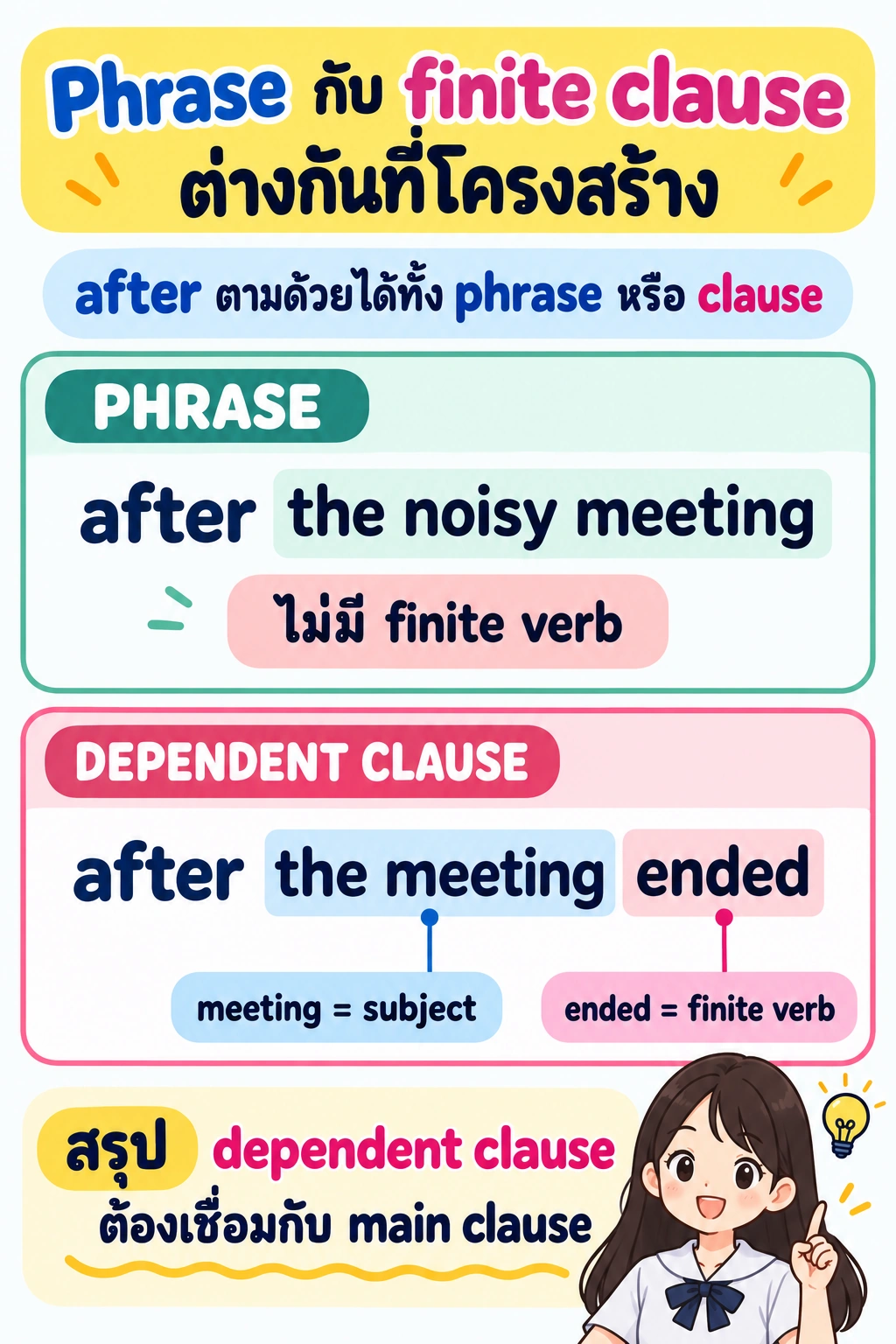
- จุดสังเกตสำคัญในภาพ:
- ภาพรวม: คำว่า after สามารถตามด้วย Phrase หรือ Clause ก็ได้
- ฝั่ง Phrase: after the noisy meeting → ไม่มี Finite Verb เป็นเพียงวลีบอกเวลา
- ฝั่ง Dependent Clause: after the meeting ended → มีประธาน meeting และกริยาแท้ ended
- คำเตือน: อย่าเหมารวมว่ากริยารูป Infinitive หรือ Participle เป็น Finite Verb และ Dependent Clause ต้องเชื่อมกับ Main Clause เสมอ
2. ชนิดของอนุประโยคและความสมบูรณ์ของความหมาย
- Independent Clause (อนุประโยคอิสระ / Main Clause):
- มีประธานและกริยาแท้ครบถ้วน สามารถสื่อความหมายสมบูรณ์และยืนอยู่ตามลำพังเป็นประโยคได้ เช่น "The students hurried inside."
- Dependent Clause (อนุประโยคไม่อิสระ / Subordinate Clause):
- มีประธานและกริยาแท้ แต่มีคำเชื่อมรอง (Subordinating Conjunction เช่น because, when, although, if, after) นำหน้า
- ไม่สามารถอยู่ตามลำพังได้ เพราะความหมายยังไม่สมบูรณ์ ต้องพึ่งพา Main Clause เสมอ
- ข้อยกเว้นประธานในประโยคคำสั่ง (Imperative Sentence):
- ในประโยคอย่าง "Close the door." ถือเป็น Clause ที่สมบูรณ์ โดยละประธาน you ไว้ในฐานที่เข้าใจ
3. กฎเกณฑ์การสร้างประโยคที่สมบูรณ์ (Complete Sentence)
- ประโยคที่ถูกต้องต้องมี Main Clause อย่างน้อยหนึ่งชุด:
- ข้อความอย่าง "Because the lights went out." ถือเป็นข้อผิดพลาดทางไวยากรณ์เรียกว่า Sentence Fragment เพราะมีเพียง Dependent Clause แต่ขาด Main Clause
- การแก้ไขที่ถูกต้อง: "Because the lights went out, we used a flashlight."
- ข้อพึงระวังเรื่อง Comma Splice:
- ไม่สามารถนำ Main Clause 2 ประโยคมาเชื่อมกันด้วยเครื่องหมายจุลภาค (,) เพียงอย่างเดียวได้ ต้องใช้คำเชื่อมประสาน (Coordinating Conjunction เช่น and, but, so) หรือเครื่องหมาย Semicolon (;)
ความรู้นี้ใช้กับโจทย์แบบไหน?
ตรวจว่าประโยคมี main clause ครบหรือยัง
สังเกตจากโจทย์: ข้อความขึ้นต้นด้วย because/when/although หรือเป็นกลุ่มคำที่จบด้วยจุด
เลือกวิธีคิด: หา subject+finite verb ของแต่ละ clause แล้วตรวจว่ามี independent/main clause อย่างน้อยหนึ่งชุดหรือไม่
แยกกลุ่มคำที่ขยายออกจากใจความย่อย
สังเกตจากโจทย์: มี to/-ing phrase หรือวลีบุพบทอยู่หน้าประโยค
เลือกวิธีคิด: ถามว่ารูป verb แสดง tense และมี subject ของตัวเองหรือไม่; ถ้าไม่ ให้พิจารณาว่าเป็น phrase ไม่ใช่ finite clause
ตัวอย่างโจทย์พร้อมวิธีคิด
ตัวอย่าง 1 · แยก dependent clause, main clause และ phrase
วิเคราะห์ “After the bus arrived, the students hurried inside before lunch.”
- “the bus arrived” มี subject the bus และ finite verb arrived; after ทำให้เป็น dependent clause บอกเวลาที่เกิดเหตุ
- “the students hurried inside” มี subject และ finite verb และยืนเป็นใจความได้ จึงเป็น main/independent clause
- “before lunch” เป็น prepositional phrase ที่บอกเวลา ไม่มี finite verb ของตัวเอง
คำตอบ: Dependent clause = After the bus arrived; main clause = the students hurried inside; phrase = before lunch
ตรวจเหตุผล: ตัด dependent clause กับ phrase ออกแล้วได้ “The students hurried inside.” ซึ่งยังเป็นประโยคสมบูรณ์
ตัวอย่าง 2 · อย่าจัด infinitive phrase เป็น finite clause
ใน “To finish before sunset, the crew packed the equipment early.” ส่วนใดเป็น phrase และส่วนใดเป็น main clause?
- “To finish before sunset” มี to + base verb finish แต่ไม่มี finite tense หรือ subject ของตัวเอง จึงเป็น infinitive phrase บอกเป้าหมาย
- “the crew packed the equipment early” มี subject the crew และ finite past verb packed จึงเป็น main clause
- ข้อความทั้งประโยคครบเพราะมี main clause; phrase ช่วยบอกจุดประสงค์แต่ไม่แทนใจความหลัก
คำตอบ: Phrase = To finish before sunset; main clause = the crew packed the equipment early
ตรวจเหตุผล: ถามว่าใครเป็นผู้ finish แล้วไม่พบ subject ภายใน phrase; ถามว่าใคร packed แล้วพบ the crew พร้อม finite verb packed